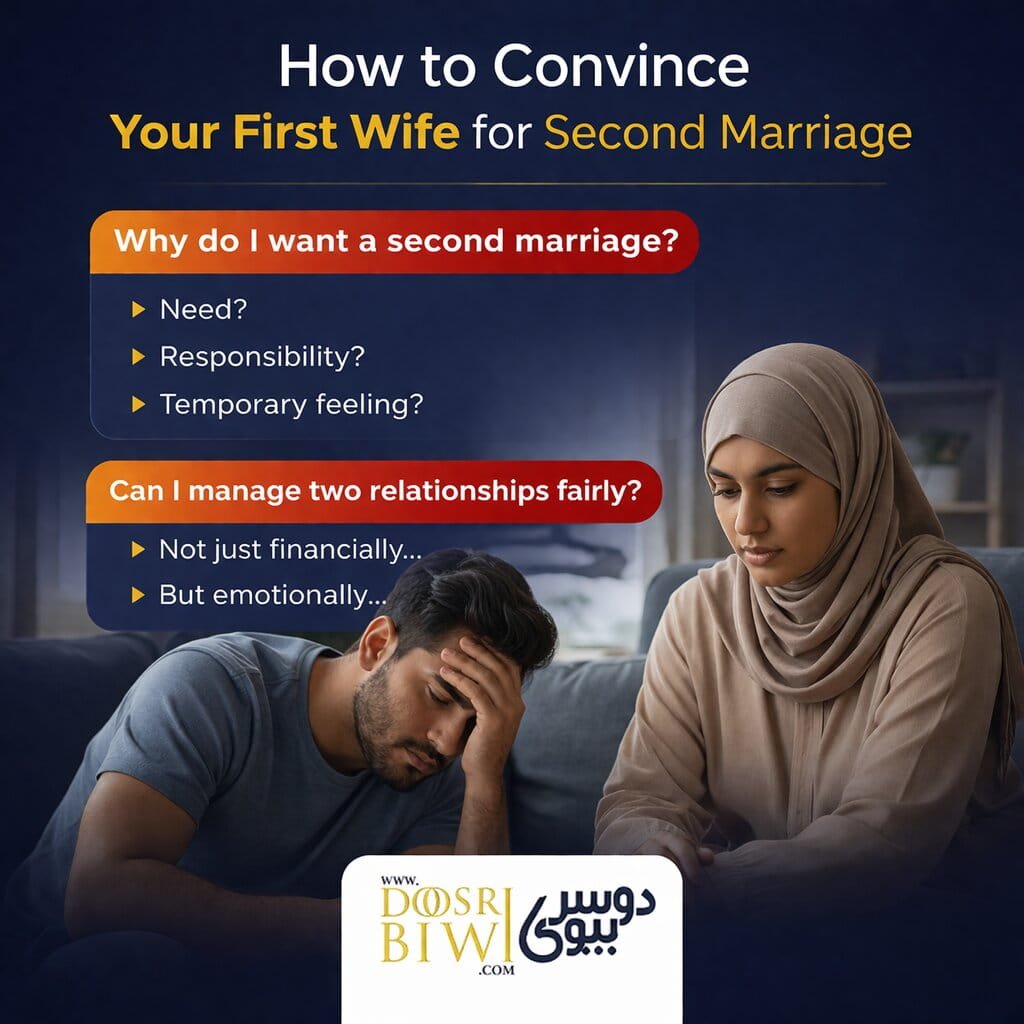
First—Be Real With Yourself
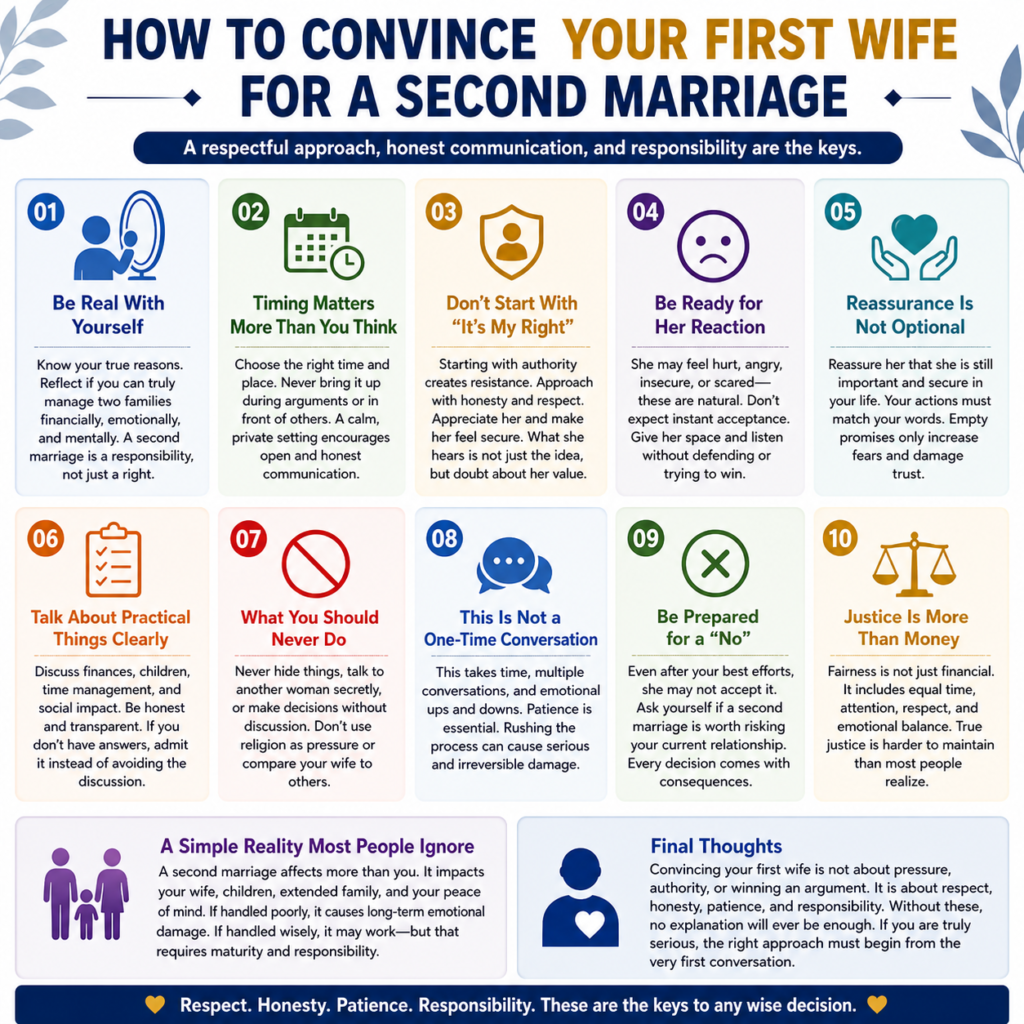
efore raising the subject, take a step back and evaluate your intentions with complete honesty. Ask yourself whether your desire for a second marriage comes from a genuine need, a sense of duty, or simply a passing emotion. If your reasons are unclear, you won’t be able to communicate them convincingly to your wife. It’s equally important to assess whether you have the capacity to support two families—not just financially, but also emotionally and mentally. A second marriage is far more than an entitlement; it carries significant responsibilities that demand careful thought and true commitment.
Timing Matters More Than You Think
Avoid raising this sensitive topic at the wrong time or in a careless manner. Don’t bring it up during heated arguments, when emotions are already high, or in front of others. Instead, wait for a peaceful moment and choose a private setting where both of you can communicate openly and honestly. How you start this conversation plays a crucial role in shaping its direction and outcome.
Don’t Start With “It’s My Right”
One of the most common mistakes is opening the conversation by claiming it as your right. Even if it may be permissible in a religious sense, leading with this mindset often sparks tension rather than mutual understanding. Instead, approach the discussion with sincerity and respect. Show appreciation for her, recognize her importance in your life, and reassure her of her place. Remember, she’s not just hearing about a second marriage—she may be feeling uncertainty about her own worth.
Be Ready for Her Reaction
No matter how thoughtfully you handle the conversation, she may still react with hurt, anger, insecurity, or fear—and those feelings are completely natural. Don’t expect instant acceptance or agreement. Allow her the time and space to process her emotions without interrupting, dismissing, or trying to prove your point. In many cases, simply listening with patience can be far more impactful than offering explanations or defenses.
Reassurance Is Not Optional
If you truly intend to move forward with this decision, offering reassurance is crucial. She needs to feel valued, secure in her place, and confident that she is not being replaced. Above all, your actions must reflect what you say—because words alone aren’t enough. Empty assurances will only deepen her fears and weaken the trust between you.
Talk About Practical Things Clearly
Beyond emotions, there are practical concerns that must be addressed. Questions about finances, children, time management, and social impact will naturally arise. If you do not have clear answers, it will create uncertainty and fear. Be honest in your responses, and if you do not yet have clarity on certain aspects, admit it openly instead of avoiding the discussion.
What You Should Never Do
There are certain actions that can permanently damage trust. Hiding things, secretly talking to another woman, or announcing a decision without discussion will only hurt your relationship. Using religion as pressure or comparing your wife to someone else can also cause deep emotional harm. These behaviors do not solve problems—they create lasting wounds.
Final Thoughts
Convincing your first wife is not about pressure, authority, or winning an argument. It is about respect, honesty, patience, and responsibility. Without these, no explanation will ever be enough. If you are truly serious about a second marriage, the right approach must begin from the very first conversation.
Do I need my wife’s permission for second marriage?
Religiously, it may not be required, but emotionally and practically, it plays a significant role. In addition, local laws may also apply depending on your location.
How long should I wait before deciding?
There is no fixed timeline. It depends on how the conversations progress and how both of you process the situation emotionally.
What is the biggest mistake men make?
The most common mistake is rushing the decision and ignoring their wife’s emotions.